The prison in Greenfingers was a music school. The neglected estate was a real house in Surrey. And when the gardeners reached Hampton Court, the production joined an actual flower show rather than recreating the whole event for the camera.
The film’s locations stretch across Surrey and the Cotswolds. Some can be identified as individual properties; others are documented only as a town or a small area. This guide covers six places and areas, keeping that distinction clear. The production’s own accounts establish the school, Norney Grange and Hampton Court most firmly. Garden and regional publications identify the other three.
Spoilers: the descriptions mention the garden restoration and the flower-show storyline. The photographs show the places themselves, not frames from the film. Map links locate buildings, streets or areas; they do not mark verified camera positions.
The locations at a glance
| Location | Area | What can be identified |
|---|---|---|
| Yehudi Menuhin School | Stoke d’Abernon, Surrey | The school complex used for HMP Edgefield. |
| Norney Grange | Shackleford, Surrey | The estate used for the garden makeover. |
| Hampton Court Palace and Flower Show grounds | East Molesey | The real event and palace setting used by the production. |
| Barnsley House | Near Cirencester, Gloucestershire | A house and garden identified in garden and heritage publications. |
| Fairford | Gloucestershire | The town, with High Street named in a regional guide. |
| The Slaughters | Cotswolds | The area around Upper and Lower Slaughter, without a confirmed individual spot. |
1. Yehudi Menuhin School: the real place behind HMP Edgefield
HMP Edgefield is a fictional prison. Its principal filming location was the Yehudi Menuhin School in Stoke d’Abernon, on Cobham Road in Surrey.
Production designer Tim Hutchinson described how the mix of older and modern buildings suited the open-prison setting. The team added sheds and greenhouses and dressed an interior visiting area. The school supplied the physical surroundings for a story about prisoners finding a new occupation.
That choice helps explain the unfamiliar atmosphere of Edgefield. The film introduces an institution with a degree of trust and ordinary social life, allowing the garden to become the centre of the men’s attention. Its setting is essential to that shift: the audience needs to believe there is room here for something to grow.
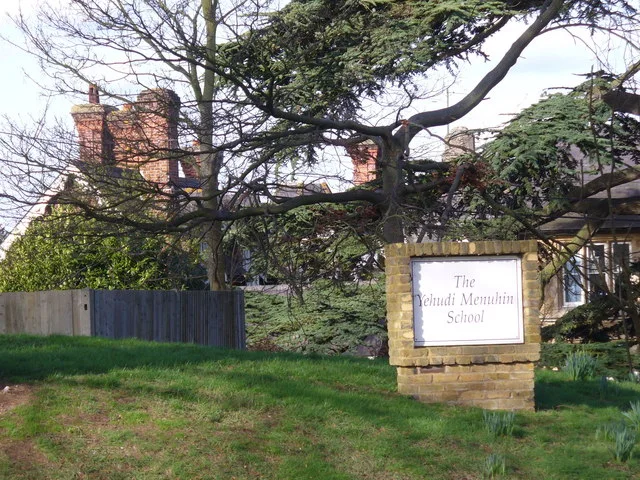
Finding it: Yehudi Menuhin School, Cobham Road, Stoke d’Abernon, Surrey KT11 3QQ.
Find the Yehudi Menuhin School on Google Maps.
Visiting: this is a working school. Do not assume access to its grounds or the buildings used for filming. The Menuhin Hall hosts public performances, but attending an event is a different arrangement from a film-location visit.
2. Norney Grange: the garden makeover
The overgrown estate where Georgina and the prisoners work was filmed at Norney Grange, in Shackleford, Surrey. The garden restoration used a genuinely neglected property, giving the production an existing landscape to transform.
The house stands on Elstead Road. Designed in 1897 by C. A. Voysey, it is listed at Grade II*. Its distinctive features include pale rendered walls, stone window dressings, slate roofs and prominent chimneys. Those details are useful for identifying the property, although the film’s confirmed association here concerns the estate and garden makeover.
For the characters, the work is an opportunity to exercise their skills beyond the prison garden. The setting makes their progress tangible: their care can change how a place looks and how other people respond to them.
Finding it: Norney Grange, Elstead Road, Shackleford, Surrey.
Locate Norney Grange on Google Maps.
Visiting: the map identifies the property, not a public entrance or an advertised film attraction. Do not plan to enter the house or grounds without permission. It is also worth distinguishing the main house from the separate lodge buildings associated with the estate.
3. Hampton Court: a real show behind the screen spectacle
Hampton Court has the strongest connection between what the audience sees and the event the production attended. The flower-show scenes were filmed during the real Hampton Court Palace Flower Show in 1999. The cast and crew spent a week there, and the gala scenes also used the real occasion.
Paterson Joseph, who plays Jimmy, recalled the crew filming from the palace roof as the actors walked towards their meeting with the Queen. That is a useful reminder that the location work extended beyond beds of flowers and exhibition displays.
The palace and show grounds belong together in this guide. The evidence does not identify an exact surviving plot where the fictional prisoners’ garden can be revisited, or establish a particular gate as a reliable stop for recreating a scene.
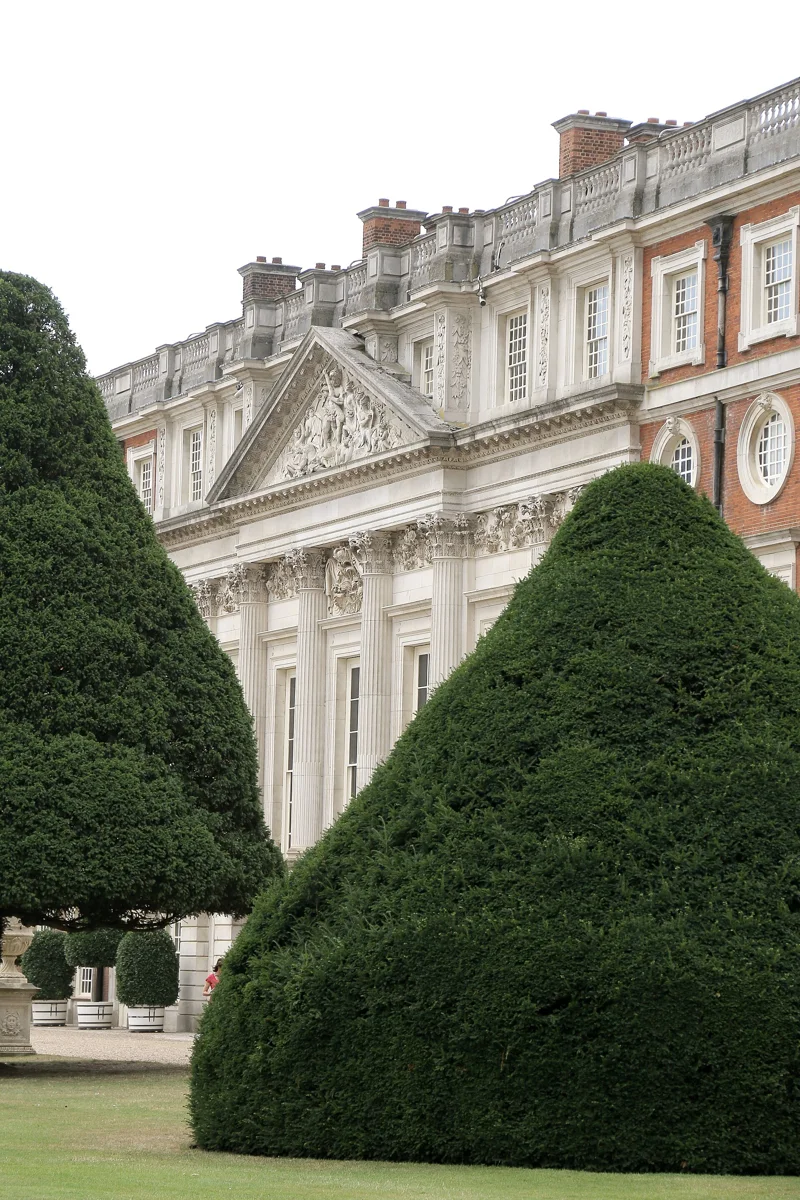
Finding it: Hampton Court Palace, East Molesey.
Find Hampton Court Palace on Google Maps.
Visiting: the palace is a visitor attraction, but a palace visit does not recreate the 1999 exhibition. Check current opening and admission arrangements before travelling. Treat the film garden as part of the production’s history, rather than something promised on today’s grounds.
4. Barnsley House: a garden with its own story
Barnsley House is identified as a Greenfingers garden location by the New York Botanical Garden and by the DiCamillo country-house database. Those accounts establish a useful destination, although they do not supply a dependable scene-by-scene match.
The house is in the Gloucestershire village of Barnsley, near Cirencester. It was the home of garden designer Rosemary Verey and now operates as THE PIG-in the Cotswolds. The gardens remain central to the property, including their laburnum walk, knot garden and Tuscan temple.
It is an appealing place to explore the horticultural world surrounding the film. The important limit is simple: the garden’s association with Greenfingers does not establish that every familiar feature appeared on screen, or that the house played Georgina’s home.
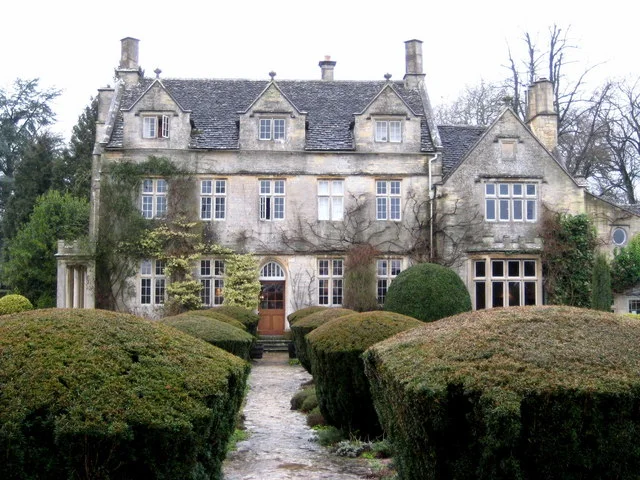
Finding it: Barnsley, near Cirencester, Gloucestershire GL7 5EE. This is the Cotswold village, not the town of Barnsley in South Yorkshire.
Find Barnsley House, now THE PIG-in the Cotswolds, on Google Maps.
Visiting: it is a hotel and restaurant property. Check arrangements for garden access directly before making a journey solely to see the grounds.
5. Fairford and its High Street
Fairford appears in film-location listings for Greenfingers. The regional guide Loving the Cotswolds narrows the reference to High Street. That gives a more useful place to explore than the county alone, without pretending to know which doorway or shopfront was used.
This is a street-level stop rather than a single attraction. Walk through it with an eye for the buildings and the shape of the street, but allow for changes since filming. Present-day businesses, signs and parked cars can make a familiar place look quite different.
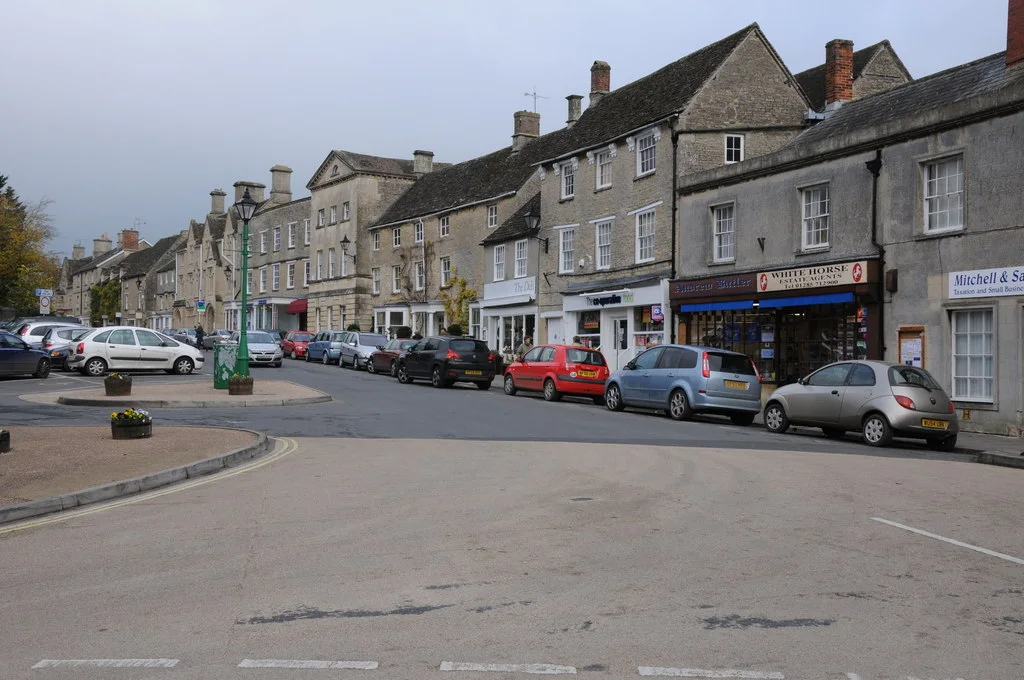
Finding it: High Street, Fairford, Gloucestershire.
Explore Fairford High Street on Google Maps.
The town is a documented location, while the more precise street identification rests on the regional account. We have not established a particular address for Colin’s accommodation or another named scene here.
6. The Slaughters: an area to explore
Both the film review site Phase9 and Loving the Cotswolds name the Slaughters as a filming area. The name refers to the neighbouring villages of Upper and Lower Slaughter, near Bourton-on-the-Water.
Here, a broad map reference is more honest than a highly specific pin. The available accounts do not distinguish which village supplied which shots. They also do not establish the much-photographed mill, a particular bridge or a hotel as a location for this film.
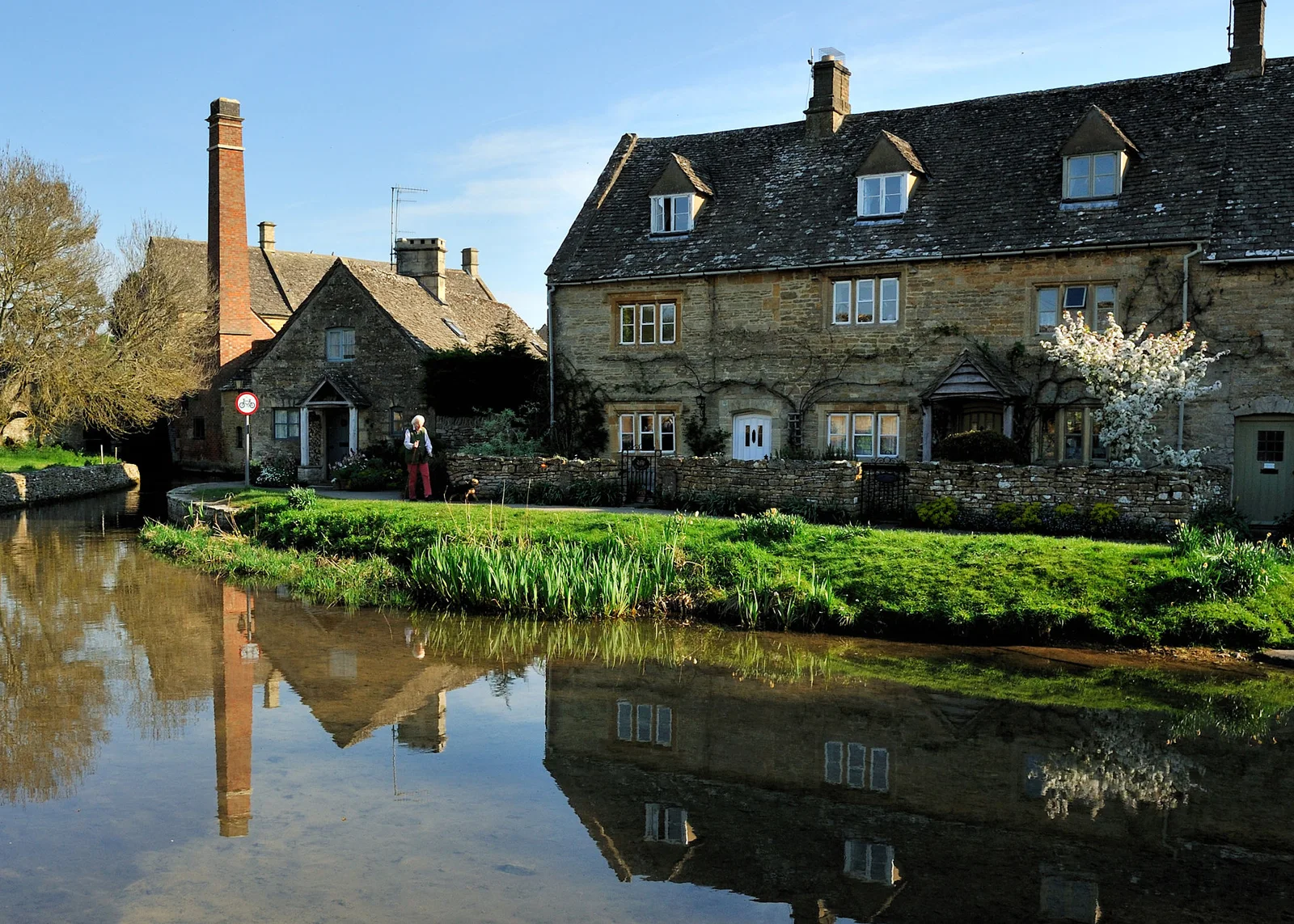
The opening photograph shows Lower Slaughter and introduces the area’s stone buildings and waterside setting. It is an illustration of the locality, not proof that the photographed view appears in Greenfingers.
Finding it: the Upper and Lower Slaughter area of the Cotswolds.
Explore the Slaughters area on Google Maps.
The map search may centre on one village. Read it as an orientation point for the area, rather than a precise filming marker. There is enough evidence to include the Slaughters in the guide, but not to count the two villages as separately verified sets.
Why Leyhill is not on this filming map
Leyhill belongs to the real story that inspired Greenfingers. That connection is different from evidence that the cameras worked there. The film’s principal prison location was the Yehudi Menuhin School, so Leyhill should not be added to a filming itinerary on the strength of the story alone.
There are also places we cannot yet pin down. The director described finding a neglected barn for Colin’s post-prison accommodation, but the production account does not name its address. Until that can be identified, it remains an interesting piece of location history rather than a destination on this map.