
The prisoners really did grow prize-winning gardens. Beyond that central fact, Greenfingers needs a more careful reading. Colin’s friendship with Fergus, the romance with Primrose and the last-minute recognition at Hampton Court belong to a screenplay inspired by real gardeners, rather than a documented account of their lives.
The distinction is there in the film’s own publicity. Distributor Samuel Goldwyn Films describes it as a fictional story inspired by Paula Deitz’s 1998 New York Times article, “Free to Grow Bluebells in England.” That gives us a useful starting point: the achievement was real; the people and events on screen need to be considered separately.
Spoilers follow, including the flower-show result and the final royal invitation.
What is real, and what belongs to the film?
| Element in Greenfingers | What we can establish |
|---|---|
| Prisoners becoming accomplished gardeners | The real foundation: gardeners at HMP Leyhill exhibited at major flower shows and won medals. |
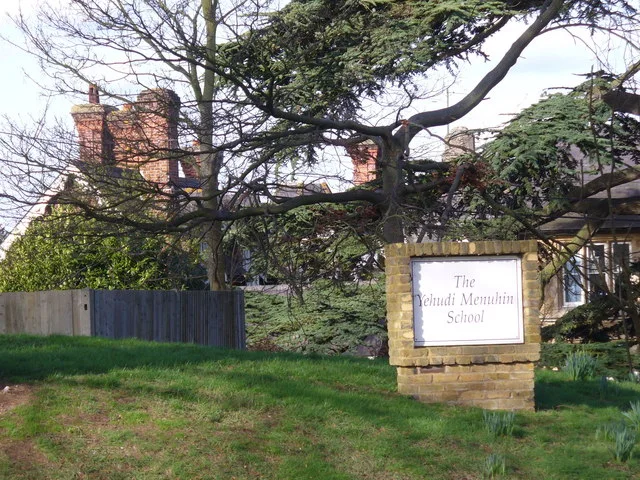
| HMP Edgefield | A fictional prison. Leyhill supplied the inspiration; the Yehudi Menuhin School supplied a principal filming location. |
| Colin Briggs and Fergus Wilks | Screen characters. There is no established one-to-one identification with particular Leyhill prisoners. |
| A Christmas gift of seeds starting everything | Part of the film’s story; not a verified account of how Leyhill’s gardening began. |
| Georgina Woodhouse and Primrose | Fictional characters, rather than documented portraits of named people in the real story. |
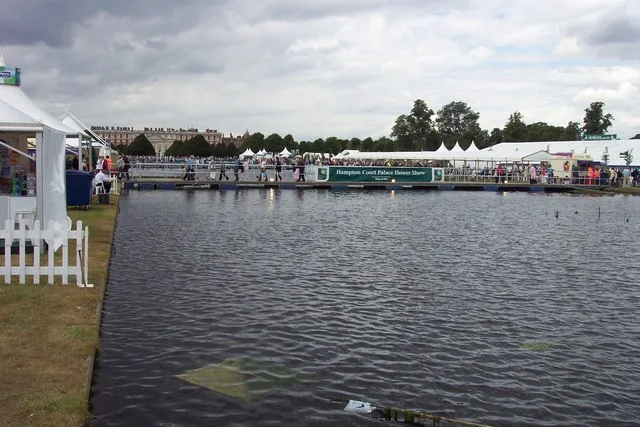
| The Hampton Court Flower Show | A real event where the production filmed. Its presence does not make the competition storyline a historical record. |
| The prisoners leaving the on-screen awards without a prize | A dramatic outcome. Leyhill’s actual record includes a Hampton Court gold medal in 1998. |
| The invitation to meet the Queen | Part of the film’s ending; not established here as an event experienced by the real team. |
“Unverified” matters in this comparison. A scene can be entirely convincing without being documented, and an absence of supporting evidence does not prove that nothing remotely similar ever happened.
Leyhill was real; Edgefield was created for the story
The real prison was HMP Leyhill, an open prison for men in Gloucestershire. Its gardening team gave the filmmakers their subject. Edgefield, the name used in the film, belongs to the fictional setting.
There is a third place to keep in mind: the prison we see was filmed at the Yehudi Menuhin School in Surrey. The production used the school’s buildings and grounds to create Edgefield. So the institution behind the story, the institution inside the story and the physical filming location are three different things.
That separation helps when looking at photographs or planning a visit. An image of Leyhill shows the real prison associated with the gardeners. An image of the school shows a place where actors performed the fictional story. Neither should be presented as interchangeable evidence for the other.
Colin and Fergus are characters, not a key to real prisoners’ lives
Clive Owen’s Colin Briggs gives the film a person through whom to tell its story. His reserve, his response to Fergus and his gradual willingness to care about other people form a dramatic progression. Fergus, played by David Kelly, gives that progression a relationship: a small act of generosity can reach someone who has largely withdrawn from the world.
It would be a mistake to turn those roles into disguised biographies without evidence. The film’s connection to Leyhill does not establish that Colin’s conviction, family history or personal relationships belonged to a particular real gardener. The same caution applies to Fergus and the other prisoners.
Owen’s own comments offer a useful glimpse of the acting behind the character. In a San Francisco Chronicle interview, he admitted that he did not enjoy gardening and explained that he wanted Colin to feel credible as a prisoner. The gardener on screen is a performance, built around a character’s changing attention to the world.
We can discuss what Colin represents without assigning his actions to someone who served a real sentence. That leaves room to appreciate the film while treating the people behind its inspiration fairly.

The violets make an origin story small enough to hold
In the film, Fergus gives Colin seeds at Christmas. Their eventual flowering supplies a visible beginning: something planted almost reluctantly becomes something worth noticing and protecting.
That is an effective way to introduce Colin’s gardening. It gives an inward change a physical form. Viewers do not have to be told that his interest is returning; they can see him respond to a living thing.
It is also a story device. The available accounts do not establish this exchange as the beginning of Leyhill’s gardening programme. A personal gift can provide a memorable beginning to a film, while a real horticultural enterprise involves work, organisation and people whose contributions will not fit into one scene.
The flower can carry its meaning without being historical evidence. In this reading, the violets connect care received from another person with care passed on to something else.

Georgina is not a biography of a famous gardener
Helen Mirren’s Georgina Woodhouse brings authority, confidence and comic impatience into the prisoners’ world. Her presence also makes it tempting to look for a single celebrated British gardener behind the character.
Helen Mirren told the Los Angeles Times that Georgina did not resemble the real British women gardeners she knew.
That is a good reason to resist presenting Georgina as a literal portrait of Rosemary Verey, Penelope Hobhouse or another named horticulturist. A resemblance suggested by a viewer is different from a documented identification.
The same distinction applies to Primrose and her relationship with Colin. Their romance develops the film’s interest in trust and life beyond prison. It should be discussed as a fictional relationship unless evidence connects particular details to real people. The estate robbery and other complications likewise cannot be used as anecdotes about Leyhill’s gardeners simply because they appear in a film inspired by them.
Hampton Court is authentic; the competition is dramatised
Here the real and the constructed sit unusually close together. Hampton Court was a genuine flower-show setting, and the production received permission to film at the event. The show garden seen in the film was physically built for the production, with a motorway-inspired design and a crashed Morris Minor.
Its existence as a real piece of landscaping does not make it a verified reconstruction of Leyhill’s historic entry. It is a garden made to serve a film, placed within the world of an actual show.
The awards provide the clearest difference. In the on-screen competition, the prisoners do not receive the recognition they hope for. Leyhill’s documented history includes a gold medal at Hampton Court in 1998. The fictional disappointment therefore cannot be treated as the result of that real competition.
Chelsea needs to be kept separate, too. It belongs to Leyhill’s wider exhibition history, but Chelsea and Hampton Court are different shows. Combining their results into a single contest makes both the history and the film harder to understand.
Did the Queen really intervene?
The ending moves beyond the judges’ decision: the gardeners receive an invitation to meet the Queen. Dramatically, it offers recognition from someone whose attention carries more weight than a competition result.
There is no verified basis in the material examined for presenting that invitation as an event in the real team’s history. Filming at Hampton Court does not establish a royal intervention, and a scene involving a royal invitation does not establish the Queen’s participation in the production.
The ending can still be read on its own terms. The men have made something worth seeing, and the film grants them a final moment of being seen. That is an interpretation of its storytelling, rather than an additional historical claim.
What the fiction leaves outside the frame
Jeff Goundrill later told The Independent that the film had not captured the reality of the work.
That reservation is worth keeping beside the film’s pleasures. A screenplay can make gardening legible through a gift, a friendship, a setback and a public moment of recognition. Actual gardens require continuing attention, and the work does not end when an audience has received its emotional resolution.
The strongest connection between screen and history remains the achievement itself: prisoners made gardens good enough to be judged in public. The film builds its own people and conflicts around that fact. Looking closely at the difference gives the real gardeners credit for their work and lets the fictional characters remain characters.