
A gardening glove resting on a pile of books is a quieter image than the flower-show spectacle of Greenfingers. Yet the photograph above captures an important part of the wider story: a greenhouse can also be a classroom. The task is to learn, practise and keep returning to something that needs attention.
The real history extends beyond the Leyhill gardeners who inspired the film. Documented projects have involved women designing show gardens, military prisoners growing food for a local food bank and nursery workers raising plants for damaged landscapes. Their purposes overlap, but their working conditions and ambitions differ.
Beyond the garden competition
Leyhill provides a useful starting point. Its official prison information lists farm and garden work and a market garden among opportunities to gain experience and qualifications. That places horticulture alongside other forms of vocational activity, rather than treating it solely as an unusual hobby.
Elsewhere, a prison garden may supply vegetables, offer a route towards qualifications or create space for a shared project. Conservation nurseries add another possibility: plants raised inside can have a future in places their growers may never visit.
These distinctions matter when asking what a programme achieves. A harvest, a qualification, a participant’s sense of pride and a change in behaviour after release are different outcomes. Each needs its own evidence.
Styal: helping to design a garden for the public
An RHS account published in 2019 describes women at HMP Styal in Cheshire contributing to the Equilibrium Garden at the RHS Flower Show Tatton Park. More than 40 women helped develop ideas with designers Richard Heys and Audra Bickerdyke; three prisoners attended the show to help construct it. The finished garden received an RHS Bronze medal.
The practical work is an important part of that account. Heys described participants who initially lacked familiarity with basic tools, then found themselves helping turn a bare plot into a garden. Encouragement and teamwork were part of learning how to do the job.
The report also recounts one former prisoner’s progression to further horticultural and floristry study and employment at a garden centre. That is a particular person’s reported experience, rather than an employment result for everyone who took part.
For a viewer of Greenfingers, Styal offers a recognisable connection: ideas developed inside a prison can reach a public audience through work that has to stand on its own horticultural merits.
East Sutton Park: houseplants and the customer beyond the gate
The Glasshouse, a social enterprise described by the RHS at East Sutton Park women’s prison in Kent, connects growing plants with a different sort of public encounter. Its work uses prison glasshouses to raise houseplants for sale and provides training towards RHS Level 2 qualifications.
In the RHS profile, co-founder Kali Hamerton-Stove describes some participants on Release on Temporary Licence working in the enterprise’s Cranbrook shop. Knowledge acquired through caring for plants becomes something they can use when advising customers.
That change in relationship is worth noticing. Someone who has learned how to maintain a plant can become the person another customer turns to for help. Hamerton-Stove reports increased confidence through that interaction; it is an observation from the project, rather than a controlled measurement of its effects.
The example also moves the story beyond a single successful display. Growing, preparing plants for sale and explaining their care require different skills, offering several ways for somebody to contribute.
Washington: a classroom, a crop and a food bank
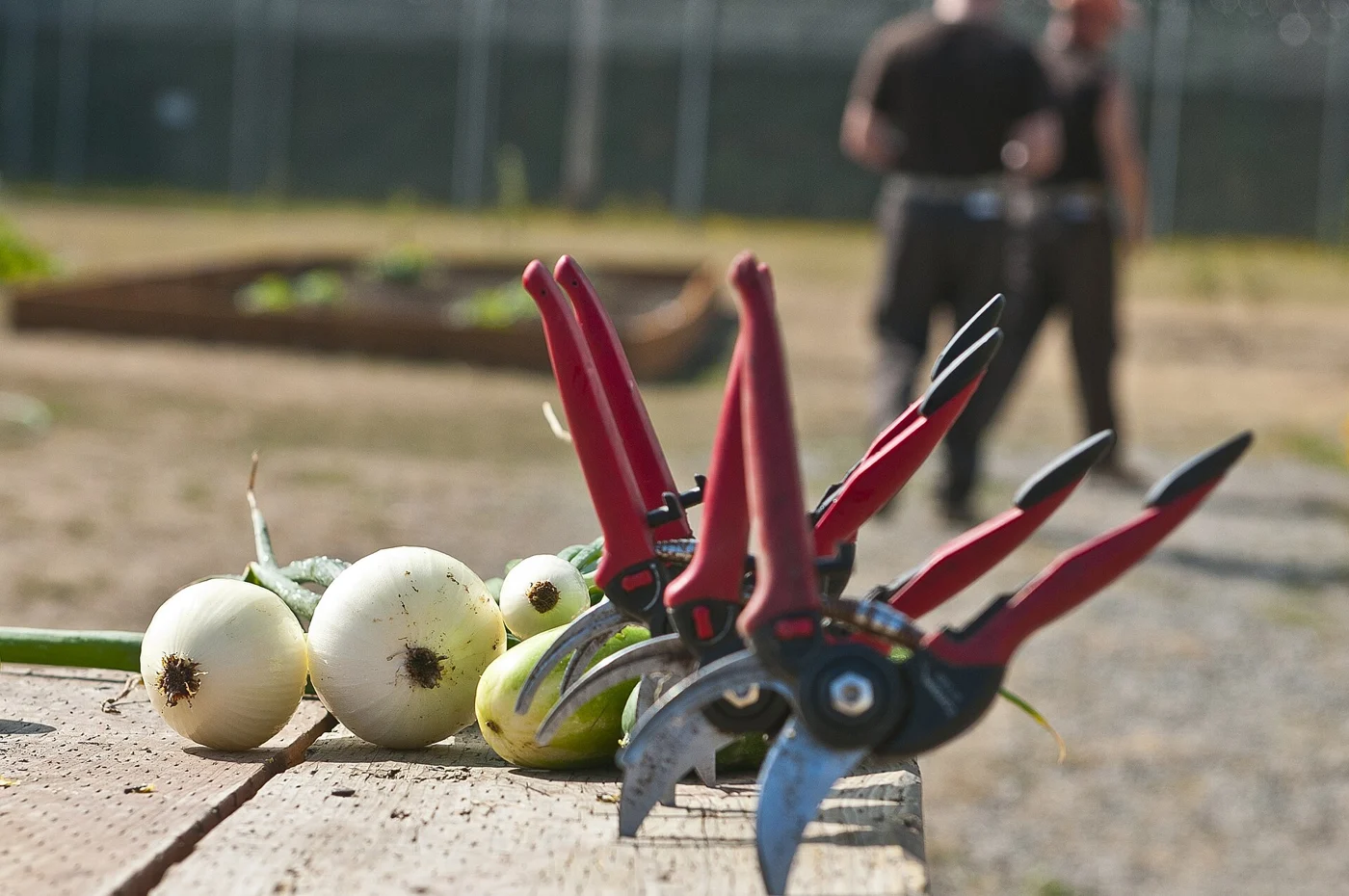
A U.S. Army account from 2012 describes a horticulture programme at the Northwest Joint Regional Correctional Facility on Joint Base Lewis-McChord. The participants were soldiers imprisoned for offences under military law, a different setting from the civilian prisons elsewhere in this article.
The work included individual growing plots, a greenhouse classroom and vegetables donated to the Thurston County Food Bank. Instructor Charles Kentfield emphasised preparation for release, including building strong résumés and learning professional accountability.
The food-bank connection gives the crop a destination beyond the prison. A lesson in growing can also produce something that another household can use.
Coyote Ridge: growing a landscape beyond the prison
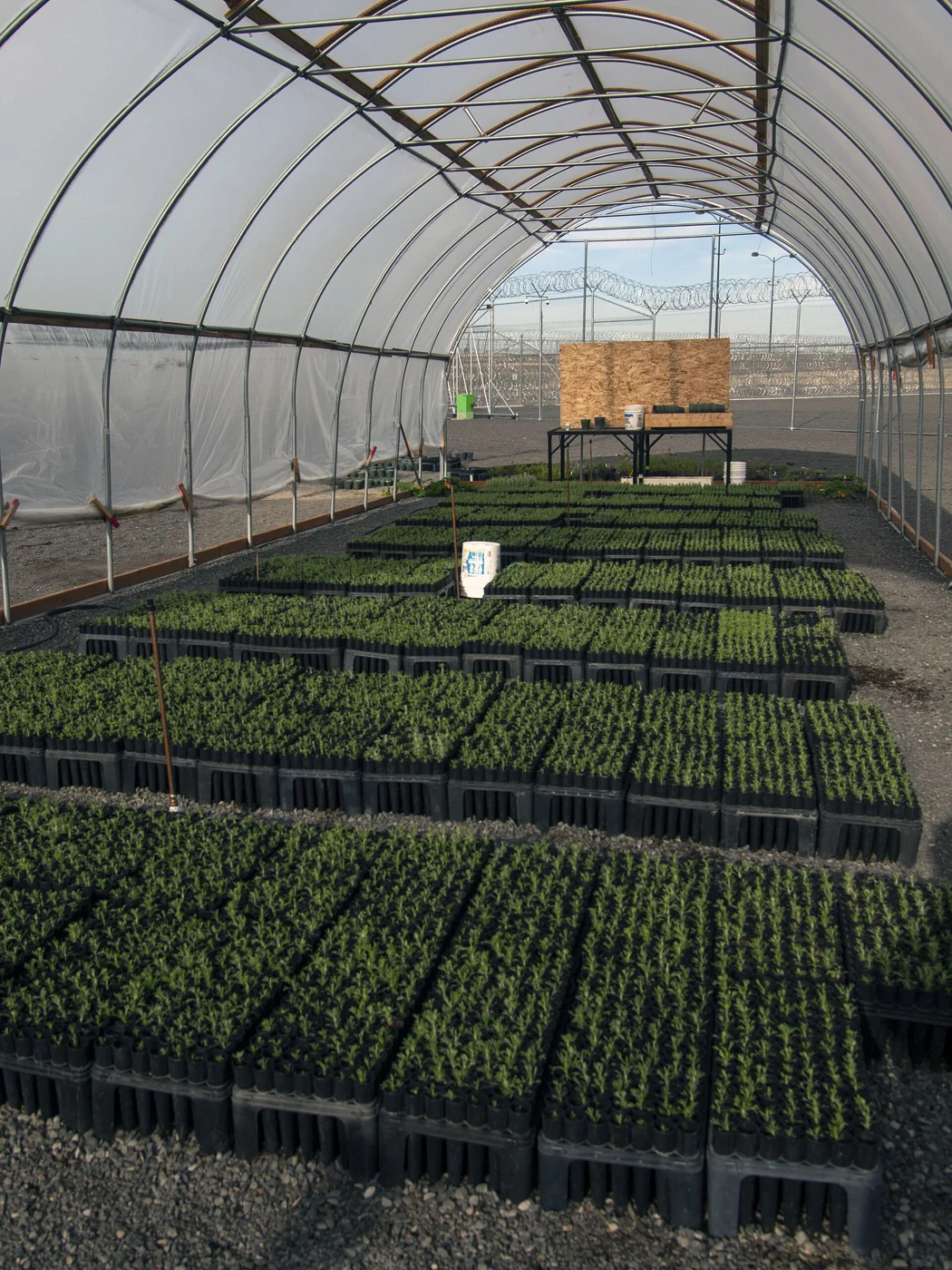
At Coyote Ridge Corrections Center in Washington State, a nursery project documented by the Bureau of Land Management involved growing sagebrush for habitat restoration. Photographs from September 2015 show the plants being raised inside the facility.
Sagebrush is part of the habitat used by the greater sage-grouse. Raising it for restoration makes the work’s purpose different from producing an ornamental display: the young plants are intended to help rebuild a landscape outside the prison.
The Bureau’s account includes participants who valued working outdoors and the opportunity to care for something beyond themselves. One grower wanted to see photographs of the plants after they had been planted out. The wish is modest but revealing: completing a nursery task need not mean losing interest in what happens next.
This work formed part of the wider Sagebrush in Prisons Project, involving the Institute for Applied Ecology, corrections partners and the Bureau of Land Management. It brings horticultural practice into contact with conservation knowledge and organisations beyond the prison system.
Rolleston: nursery training with a destination
New Zealand’s Department of Corrections offers another example of plants travelling further than their growers. A 2025 account describes Rolleston Prison’s nursery supplying the Te Hoiere restoration project in Marlborough with plants including flax and carex.
The report identifies training towards Level 2 primary industries horticulture skills and Level 3 horticulture nursery production qualifications. It also describes instructors visiting planting sites and the encouragement participants gained from photographs showing where their plants had gone.
That last detail echoes the Coyote Ridge grower’s wish. Seeing the eventual planting connects nursery routines with a larger task: protecting waterways and restoring catchment landscapes. The work has a destination, rather than ending when a tray leaves the growing area.
These are accounts of training and plant supply. They do not, by themselves, tell us how many participants later found sustained employment or how their outcomes compared with people outside the programme.
What participants remember, and what research can tell us
A gardener at HMP Wymott, writing in the RHS’s Summer 2017 Grass Roots, remembered the camaraderie of developing a display and the pride of showing visitors around after the prison’s 2016 Windlesham Trophy win. The award, established in 1983, recognises prison gardening in England and Wales.
The significance of recognition is easy to understand in that account. Visitors responded to something the gardeners had made together. Their work gave them a reason to receive praise and explain what they knew.
Research can explore such experiences more systematically, while still having limits. A 2024 study by Isabella Fisk and Catherine Hamilton-Giachritsis gathered written online responses from 11 formerly incarcerated participants about gardening and horticulture in prison. Most described benefits, including help with coping and skills; one described a strongly negative experience of the work.
The sample was small and self-selected, and memories came from people at different stages after release. The researchers acknowledged limitations in generalising the findings. This was an exploration of experience, not a trial measuring whether gardening reduced reoffending.
The negative response matters alongside the positive ones. Being allocated outdoor work does not automatically mean feeling supported, respected or able to learn. How the work is organised is part of the story.
A second chance needs somewhere to lead
The projects above make the idea of a second chance concrete in different ways: a person learns a technique, contributes to a design, advises a customer or grows something for a community outside. Their value need not depend on a dramatic competition victory.
For someone reading these accounts after Greenfingers, the useful question is what surrounds the plants. Are there instructors, opportunities to develop skills, recognition for the work and ways to carry that learning beyond the gate? A garden can create an opening. The people, resources and relationships around it help determine what somebody can do with that opening.