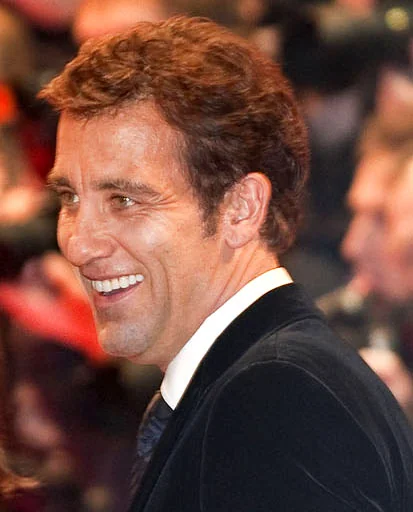
Clive Owen did not share Colin Briggs’ enthusiasm for gardening. Preparing for Greenfingers, he put the prison character first.
That small distinction opens a useful route through his career. The occupation changes — casino dealer, gardener, doctor, detective — but the work involves more than looking comfortable with the tools. Owen is often most interesting when a character’s competence gives us only a partial view of the person underneath.
His path to Greenfingers began on a school stage. It later took him through a casino film that found an audience abroad, a second chance at a coveted theatre role, and a detective story for which he already had the perfect poster on his wall.
The Artful Dodger had made up his mind
Owen traced his ambition to playing the Artful Dodger at thirteen. In a career interview with Eye For Film, he recalled knowing from that first school performance that he wanted to act. Youth theatre followed, then two years of unemployment after leaving school at sixteen, before he applied to RADA.
Television became both employment and practical training. Chancer brought recognition, but also repeated offers to play a familiar kind of charming man. He wanted more varied work and a sense of risk.
It is an instructive beginning because success creates its own problem. Being recognisable can help an actor find work while narrowing what people imagine him doing. The young performer who wanted a way into the profession now had to find ways beyond the image that had made him employable.
That makes Colin an interesting later choice. His withdrawal leaves little room for the easy charm of a conventional television lead. The pleasure of Greenfingers depends on watching that reserve gradually become less secure.
Croupier: learning the hands, finding the voice
In Mike Hodges’ Croupier (1998), Owen played Jack Manfred, a writer working in a casino. The role required the audience to believe that he could handle the job while listening to a voice that stood apart from the action.
He attended croupier school to make his hands convincing without a double. The practical skill helped keep the person and the activity together on screen.
The production notes preserved by the BFI reveal another concern. Owen regarded the voiceover as central to the film: a private conversation with the audience that made Jack’s otherwise elusive inner world accessible. Hodges, meanwhile, valued the precision of his acting and his understanding of filmmaking rhythms.
There is a useful connection to Colin here. Both performances ask us to pay attention to somebody who does not readily explain himself to the other people around him. Croupier lets us hear a running commentary; Greenfingers gives Colin a friendship through which his guardedness can begin to change.
In a later GQ retrospective, Owen identified Croupier as a crucial shift in his career, crediting its American reception with opening doors. The breakthrough came through a small film whose effect continued beyond its initial release.
Greenfingers: the prisoner came before the gardener
Colin Briggs gives Owen a different setting for that reserve. Fergus, played by David Kelly, keeps reaching towards a man who would prefer to be left alone. Gardening gives them something to do together before Colin is ready to say very much.
Speaking to the San Francisco Chronicle, Owen described gardening as secondary to Colin’s credibility as a prisoner. He also recalled watching Birdman of Alcatraz and admiring Burt Lancaster.
The connection is about finding a dramatic foundation for the character. A viewer has to believe in Colin’s isolation for the small signs of attention to matter. A plant taking hold cannot carry the whole emotional story by itself; Owen has to make us notice what caring for it costs this particular man.
That is part of the value of this quieter film within his career. Colin allows a change in mood to remain small and readable. The performance can move towards warmth without having to make the character suddenly expansive.
Closer: returning to a play from the other side
Closer offered an unusual opportunity: Owen came back to a work he knew intimately and played somebody else.
He had played Dan in the original London stage production of Patrick Marber’s play. In Mike Nichols’ 2004 film, Dan was played by Jude Law, while Owen took Larry. Speaking to Blackfilm at the time, Owen explained that he was older and that Law was already cast; he was delighted to be involved in a piece with four substantial roles.
There was a longer history behind the switch. Owen later recalled to GQ that he had originally wanted Larry, but Marber had considered him too young. The screen adaptation eventually brought him the role he had wanted years earlier.
The story offers more than a satisfying piece of casting trivia. An actor who has lived inside a play can return with knowledge of its confrontations, pauses and shifting alliances, then experience those exchanges from another position. Familiarity with the writing does not remove the challenge of giving a different person a life.
Larry brought Owen the supporting actor BAFTA in 2005 and an Academy Award nomination. Those honours followed a return to theatre material, rather than a departure from it.
Children of Men: finding a person inside the spectacle
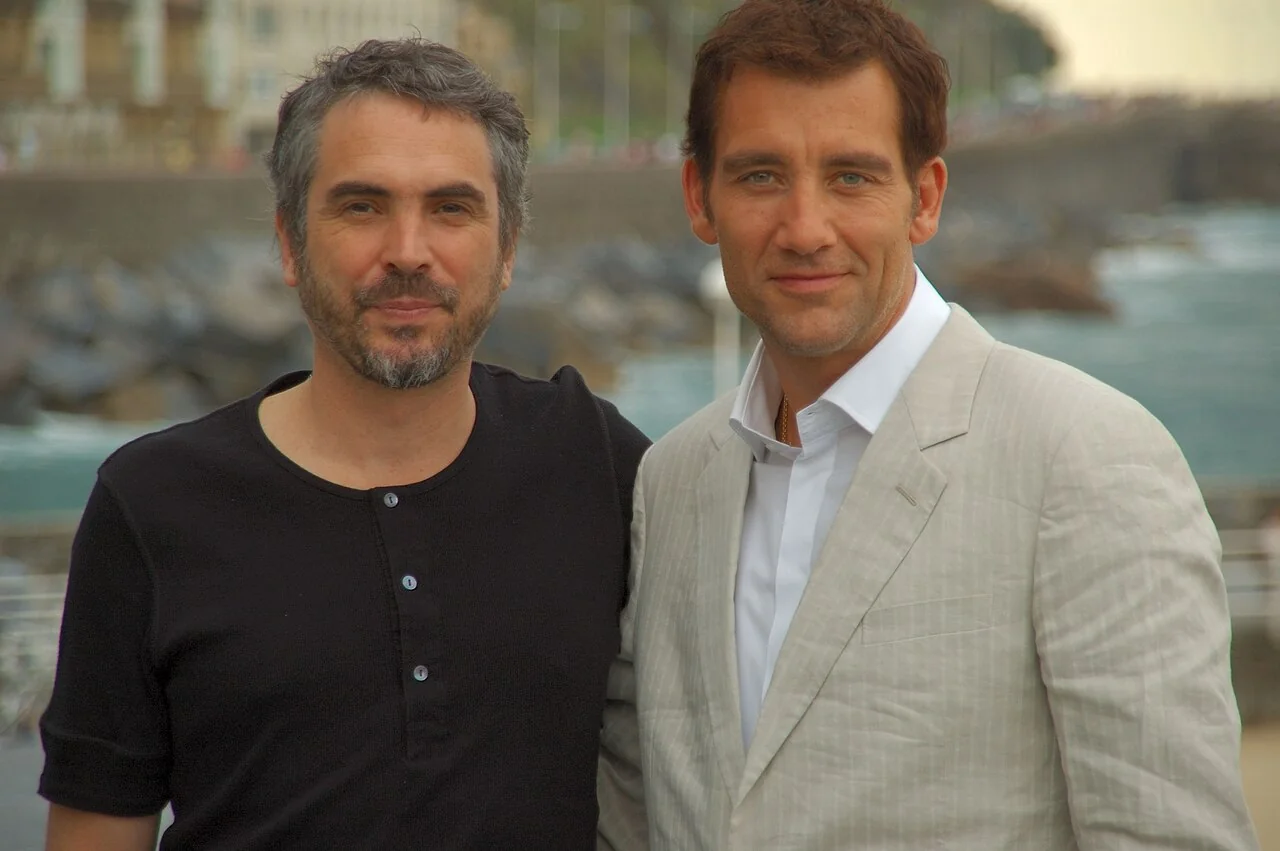
In Children of Men (2006), Owen worked with Alfonso Cuarón on a much larger canvas. His character’s journey unfolds within a dystopian Britain where the surrounding world continually presses into the action.
Discussing the film with Eye For Film, Owen recalled the careful planning of the tracking shots and the repeated configuring of sets. He emphasised the work of the camera team and the need for events to feel real.
For the viewer, that apparent immediacy is part of the film’s force. The actor must remain somebody we can follow while the image carries an extraordinary amount of activity. The technical achievement and the human presence need to work together; a beautifully coordinated shot still needs a person at its centre.
Seen beside Greenfingers, it shows how differently a performance can operate in a frame. Colin’s world allows attention to settle on a small patch of growth. Here, Owen has to hold our attention inside a far more turbulent environment.
The Knick: a script worth changing plans for
The attraction of The Knick began with the writing. Owen told The Playlist that Steven Soderbergh contacted him about making a ten-hour television drama. Reading the script made him feel he had to do it.
Dr John Thackery offered a character whose brilliance came with arrogance, addiction and danger. Owen was drawn to the difficulty of keeping an audience with a leading figure who could be so abrasive. He also recalled that all ten scripts arrived before shooting, allowing the team to understand the whole first-season journey.
It is a different proposition from asking an audience to like a character immediately. Thackery’s ability gives people reasons to rely on him, while his behaviour makes that reliance uncomfortable. The tension gives Owen something more demanding to play than professional authority alone.
Colin is also a man whom the audience must learn to approach, though Greenfingers moves towards a much gentler form of connection. The contrast makes the range of the work easier to see without reducing either character to a familiar expression or manner.
Monsieur Spade: the poster was already on the wall
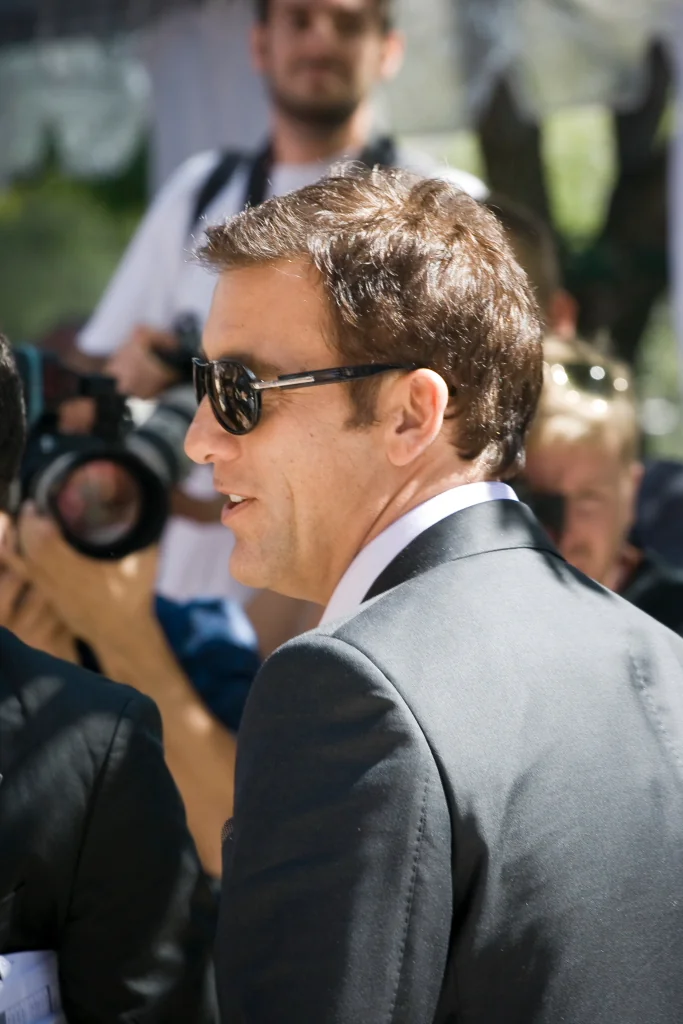
When Scott Frank and Tom Fontana approached Owen about playing Sam Spade, he could supply an unusually direct answer. He photographed the original Maltese Falcon poster hanging in his home and sent it to them.
In his 2024 interview with NPR’s Scott Simon, Owen described his affection for the novel, the film and Humphrey Bogart. For Monsieur Spade, he returned to Bogart’s speech patterns and rhythms as a foundation for a detective now living in France. He wanted the older Spade to retain a connection with the man who had come from San Francisco.
That preparation brings this selection of roles back to a useful point. The actor who did not need to love gardening to play Colin could draw intensely on a personal enthusiasm when it served another character. What mattered was finding the right route into each part.
For viewers meeting Owen through Greenfingers, Colin remains a rewarding place to begin: a man whose growing interest in the world becomes visible before he is ready to put much of it into words.